
THE FUTURE OF NIGERIAN COCOA BEGINS BENEATH THE SOIL


What Ghana's CRIG Research Means for Nigeria's Cocoa Industry—and Why It's Time to Rethink Productivity, Traceability, and Farmer Prosperity
For decades, cocoa has remained one of West Africa's most valuable agricultural commodities, supporting millions of livelihoods and contributing billions of dollars annually to national economies. Yet while global demand for sustainably produced, traceable, and premium-quality cocoa continues to rise, the realities on many cocoa farms tell a different story.
Across West Africa, cocoa plantations are aging. Soil fertility is declining. Climate variability is increasing. Farmers struggle with low productivity, limited access to finance, poor extension services, fragmented production systems, and increasingly stringent export requirements.
The question facing every cocoa-producing nation is no longer simply "How do we produce more cocoa?"
It is "How do we produce better cocoa, more sustainably, more profitably, and in a way that secures future generations?"
Recent research from Ghana provides valuable insight into that question.
A Lesson from Ghana: Science Before Scale
One of the greatest strengths of Ghana's cocoa industry has always been its willingness to place scientific research at the centre of agricultural development.
Rather than relying on assumptions or marketing claims, innovations are subjected to rigorous evaluation before they are introduced to farmers.
According to the CRIG research summary covering field evaluations between 2023 and 2025, Humi[K] WSP® was evaluated under cocoa production systems using an application rate of 3.75 litres of concentrate per hectare, applied every 30 days for six applications annually. The trial compared Humi[K] WSP with a reference foliar fertilizer programme and an unfertilized control.
The reported results were notable:
| Treatment | Yield (kg/ha) |
| Humi[K] WSP | 2,137.8 |
| Reference Foliar Fertilizer | 1,573.7 |
| Unfertilized Control | 1,026.1 |
The trial concluded that Humi[K] WSP significantly outperformed both the reference fertilizer and the untreated control under the evaluation conditions.
These findings are significant not because they promote a single product, but because they reinforce a broader principle:
Healthy soils produce healthier cocoa.
Productivity Is Not Just About Fertilizer
For many years, discussions around cocoa productivity have centred almost exclusively on applying more fertilizer.
While nutrients remain essential, modern agronomy increasingly recognizes that productivity begins with soil function, not simply nutrient quantity.
Healthy cocoa soils require:
- Balanced nutrient availability
- Active microbial populations
- Good soil structure
- Strong root development
- High organic matter
- Efficient water retention
- Effective nutrient cycling
When soils become compacted, biologically inactive, or depleted of organic matter, even large applications of conventional fertilizer become progressively less effective.
This explains why many cocoa farmers experience diminishing returns despite increasing fertilizer costs.
The future of cocoa production lies not in feeding the crop alone, but in restoring the biological system that supports the crop.
Understanding Humi[K] WSP
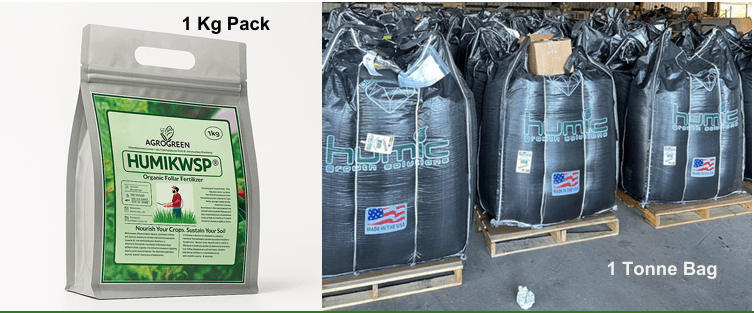
Humi[K] WSP represents a different approach to crop nutrition.
Rather than functioning solely as a conventional fertilizer, it combines nutrient supply with soil conditioning principles associated with regenerative agriculture.
Its formulation includes:
- 14% Potassium (K₂O) to support flowering, pod development, carbohydrate movement, bean filling, and drought resilience.
- Nitrogen to sustain balanced vegetative growth.
- Calcium to strengthen plant tissues and improve structural integrity.
- Essential micronutrients, including Magnesium, Zinc, Copper, Iron, and Boron, which play critical roles in enzyme activity, chlorophyll production, pollen viability, and nutrient metabolism.
The technology is designed not only to nourish cocoa trees but also to improve the soil environment in which they grow.
As cocoa-producing regions across the world confront declining soil fertility and increasing climate stress, regenerative soil management is becoming one of the most important conversations in modern agriculture.
Why This Matters for Nigeria
Nigeria possesses exceptional ecological conditions for cocoa production.
Our cocoa is widely respected for its flavour profile and quality potential.
Yet our national productivity continues to lag behind several competing producer nations.
Many Nigerian cocoa farms face challenges that are well understood:
- Aging plantations.
- Low soil organic matter.
- Poor nutrient management.
- Limited access to quality extension services.
- Weak farmer organization.
- Inadequate farm records.
- Poor post-harvest handling.
- Limited digital traceability.
These are not problems that can be solved through one intervention alone.
They require an integrated production ecosystem.
CRIN Can Become Nigeria's Innovation Engine
Nigeria already has an institution capable of driving this transformation.
The Cocoa Research Institute of Nigeria (CRIN) possesses decades of scientific expertise in cocoa breeding, crop protection, agronomy, and production systems.
The opportunity now is to strengthen collaboration between CRIN, universities, private agribusinesses, farmer cooperatives, financial institutions, exporters, and technology providers.
Research should not remain inside laboratories.
It should move rapidly from research plots to farmers' fields through demonstration farms, extension programmes, and commercial partnerships.
Innovation succeeds when science reaches the farmer.
Digital Agriculture Is No Longer Optional
Global cocoa markets are changing.
Buyers increasingly require evidence of where cocoa was produced, how it was managed, and whether it complies with environmental standards such as the European Union Deforestation Regulation (EUDR).
Paper records alone are no longer sufficient.
Digital agriculture is becoming essential infrastructure.
Satellite monitoring, farm mapping, digital production records, geospatial verification, climate monitoring, and electronic traceability are now central to market access.
At AgroGreen Dynamics Limited, this philosophy has informed the development of FarmTrack™, our digital agriculture and farm intelligence platform.
FarmTrack™ combines satellite imagery, farm mapping, monitoring, and production records to help farmers improve management decisions while building transparent, traceable supply chains.
Traceability should not be viewed as regulatory compliance alone.
It is becoming a competitive advantage.
Farmers Need More Than Inputs
Across Africa, one of the biggest misconceptions in agricultural development is that distributing inputs alone will transform productivity.
Experience has shown otherwise.
Farmers also require:
- Practical training.
- Continuous technical support.
- Demonstration farms.
- Good agricultural practices.
- Financial literacy.
- Market intelligence.
- Business management skills.
This is why Farmer Field Schools remain one of the most effective extension models available.
Learning through observation, experimentation, and peer engagement accelerates technology adoption far more effectively than classroom lectures alone.
Knowledge is an agricultural input.
The Power of Clustering
Nigeria's cocoa landscape is dominated by thousands of smallholder farmers.
Individually, many struggle to access affordable finance, certification programmes, mechanization, and premium international markets.
Collectively, they become significantly more competitive.
Cluster-based production enables:
- Shared technical services.
- Bulk input procurement.
- Centralized fermentation.
- Better quality control.
- Lower logistics costs.
- Easier certification.
- Improved bargaining power.
- Stronger relationships with exporters.
Farmer prosperity increases when production systems become collaborative rather than fragmented.
Professional Farm Management
Agriculture is increasingly becoming a business.
As commercial investment grows, cocoa production requires professional planning, monitoring, budgeting, and technical supervision.
Through our ManagedFarm™ model, AgroGreen works alongside landowners, investors, and farmer groups to deliver structured farm management systems focused on productivity, sustainability, and profitability.
Good management converts potential into performance.
Finance Must Follow Data
Access to finance remains one of the greatest barriers to agricultural growth.
Yet financing decisions become easier when lenders have confidence in farm performance.
Digital farm records, satellite monitoring, production history, traceability systems, and structured farm management create transparency that reduces lending risk.
This opens new opportunities for innovative agricultural financing models linked to verified production rather than assumptions.
AgroGreen is working with strategic banking partners to develop financing solutions that reward productive, well-managed farms and support sustainable cocoa expansion.
Market Access Is the Final Piece
Producing more cocoa has little value if farmers cannot access reliable markets.
International buyers increasingly seek suppliers capable of delivering consistent quality, traceability, sustainability, and dependable volumes.
Building these relationships requires coordination across the entire value chain.
AgroGreen is strengthening international market linkages and structured offtake partnerships designed to connect Nigerian cocoa producers with premium markets while improving income stability for farmers.
A resilient value chain begins with the farmer and ends with a satisfied buyer.
A Call for Collaboration
Nigeria's cocoa future will not be transformed by government alone.
Neither will it be transformed by private companies acting independently.
The path forward requires genuine collaboration among:
- CRIN
- Federal and State Governments
- Farmer Cooperatives
- Development Partners
- Financial Institutions
- Exporters
- Technology Providers
- Agribusiness Companies
Each has a critical role to play in restoring Nigeria's competitiveness within the global cocoa economy.
AgroGreen's Vision for Nigeria's Cocoa Renaissance
At AgroGreen Dynamics Limited, we believe the future of cocoa is regenerative, digital, inclusive, and market-driven.
Our approach is built around an integrated ecosystem that combines:
- Regenerative soil health technologies, including Humi[K] WSP.
- FarmTrack™ digital agriculture, monitoring, and traceability.
- ManagedFarm™ professional farm management services.
- Farmer Field Schools that deliver continuous practical learning.
- Cooperative clustering to strengthen farmer economies.
- Innovative agricultural finance through strategic partnerships.
- International market linkages and structured offtake arrangements.
These are not isolated solutions.
Together, they form a comprehensive model for transforming cocoa production from the soil to the global marketplace.
The Road Ahead
The future of Nigerian cocoa will not be determined by how many factories we build.
It will be determined by the health of our soils, the productivity of our farms, the knowledge of our farmers, the strength of our institutions, and the resilience of our value chains.
Ghana's recent research reminds us that sustainable productivity begins beneath the soil surface. When science guides innovation, farmers prosper, markets respond, and nations become more competitive.
Nigeria has the land. We have the climate. We have experienced farmers. We have respected research institutions. We have innovative agribusinesses ready to partner in national development.
Now is the time to bring these strengths together.
If we invest in healthier soils, empower farmers with knowledge and technology, strengthen research institutions, embrace digital agriculture, improve access to finance, and build trusted market linkages, Nigeria can once again become a leading force in the global cocoa industry.
The future of Nigerian cocoa does not begin in the factory.
It begins beneath the soil.